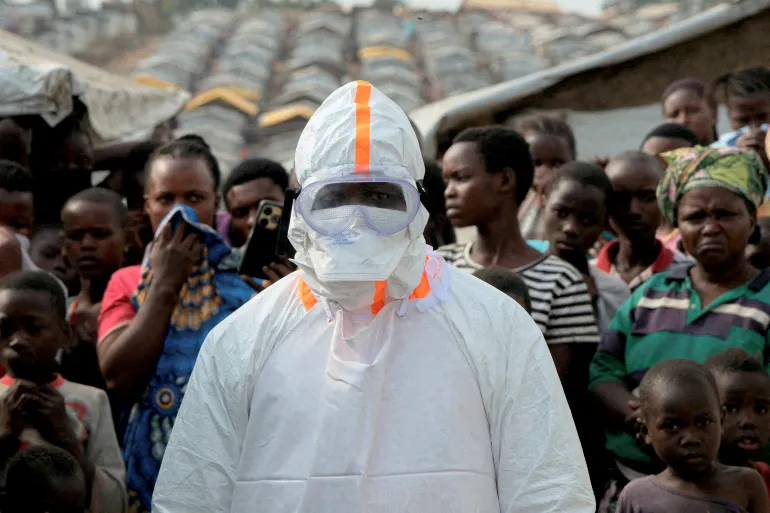

Ebola Cases Rise Above 3,200 as Death Toll Reaches 1,405 in Democratic Republic of Congo

July 27th,2026,By Faith Nthiani
The Democratic Republic of Congo (DRC) has reported a sharp increase in Ebola infections, with confirmed cases rising to 3,200 and the death toll reaching 1,405, according to the country’s health authorities. The outbreak, which began in May 2026, has become one of the fastest-growing Ebola outbreaks ever recorded in the country.
Health officials say the number of confirmed infections increased by nearly 1,000 cases within10 days, raising concerns about the rapid spread of the virus across five provinces. The outbreak is being caused by the Bundibugyo strain of the Ebola virus, a rare type for which there is currently no approved vaccine or specific treatment.
The World Health Organization (WHO), working together with the DRC Ministry of Health and other partners, has intensified surveillance, contact tracing, laboratory testing and community awareness campaigns in affected areas. Health workers are also encouraging residents to report symptoms early and avoid contact with infected individuals to reduce transmission.
However, the response has been slowed by insecurity in some parts of eastern Congo, shortages of medical supplies and health workers, and mistrust among some communities. These challenges have made it difficult for response teams to trace contacts, isolate patients and carry out safe burials, allowing the disease to spread more quickly.
Ebola is a severe viral disease that spreads through direct contact with the blood or other bodily fluids of an infected person or contaminated surfaces. Early symptoms include fever, headache, muscle pain, weakness and sore throat before progressing to vomiting, diarrhea and, in some cases, internal and external bleeding.
Health experts have urged neighboring countries to strengthen disease surveillance and preparedness to prevent cross-border transmission. The WHO continues to monitor the outbreak closely while supporting response efforts in the region. Authorities have appealed to the public to follow public health advice, seek immediate medical care if symptoms appear and cooperate with health workers to help contain the outbreak.